Don’t Finalise the Itinerary Before Answering These 4 Questions
When a business starts planning a Team Building or Corporate Trip, the first question that usually comes up is:
“Where are we going this year?”
The beach or the mountains?
Da Nang, Hoi An, Hue, Phu Quoc or somewhere new?
In reality, the destination shouldn’t be the first step in the planning process.
A trip can have a beautiful hotel, a famous destination and a packed itinerary, and still fail to create the right experience for the team.
On the other hand, a lesser-known destination can be a better choice if it fits the goals, the size of the group and what the business really wants to achieve.
So before opening a list of destinations, start with 4 more important questions.
01. WHAT IS THE TRIP FOR?
This is probably the most important question.
A company trip can have many different goals:
– Relaxing and recharging.
– Bringing the team closer together.
– Improving communication between departments.
– Welcoming new staff.
– Encouraging team spirit.
– Exploring a new destination.
– Combining it with a conference, training or year-end review.
– Or simply giving everyone time away from their daily work.
Each goal leads to a completely different way of organising the trip.
If the goal is Team Building, the programme may need activities that create interaction and cooperation between team members.
If the goal is a Corporate Retreat, the business may prioritise quiet spaces, nature, rest time and lighter-paced activities.
If the goal is MICE or Corporate Travel, the conference element, the venue, transport and the ability to combine work with experiences become more important.
An approach recommended by many event professionals also starts with this very question: define the goal first, then decide on the budget, format, destination and itinerary.
So don’t ask “Where are we going?” first.
Ask:
“After this trip, what does the business want to change?”
02. WHO WILL BE TAKING PART?
A Team Building trip for 20 people and one for 200 people clearly can’t be designed the same way.
The size of the team directly affects:
– Transport.
– Type of accommodation.
– Event spaces.
– How groups are split.
– Team Building activities.
– Travel time.
– Dining format.
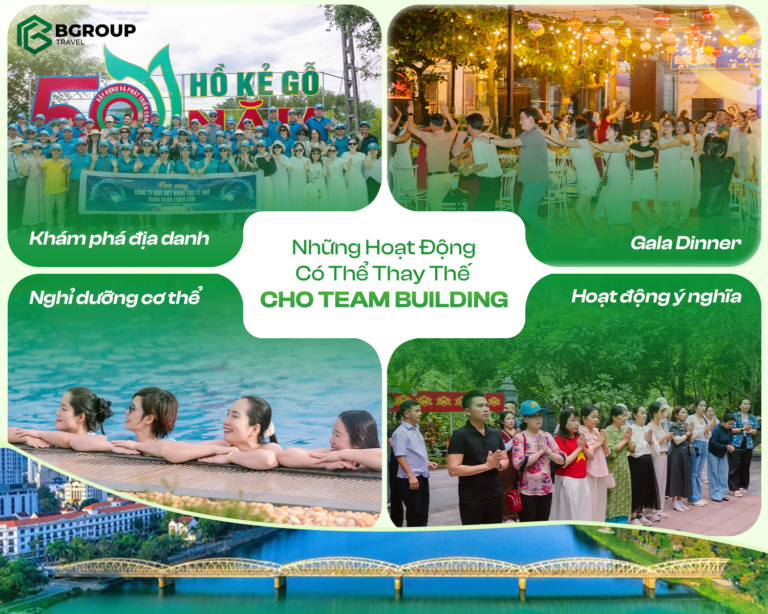
– Whether a Gala Dinner is possible.
– Operations staff.
– Overall cost.
But numbers aren’t the only factor.
Businesses also need to understand who is going on the trip.
It might be:
A young team
→ May suit more active, adventurous and interactive experiences.
A multi-generational team
→ Needs a balance between activities, rest and comfort.
Several different departments
→ May prioritise activities that create chances to connect outside everyday work.
Leadership and staff together
→ Activities need to be designed so everyone can interact naturally, rather than feeling divided by rank.
A remote team or one spread across several locations
→ The trip may be one of the rare chances for everyone to meet in person.
In other words:
It isn’t enough to know “how many people are going” – you need to understand “who those people are”.
That is why the size and make-up of the group should be defined before choosing a destination. The budget and the attendee list are also directly linked when planning a Corporate Trip.
03. HOW MUCH BUDGET AND TIME DO YOU HAVE?
This is a very practical part, but it is sometimes decided too late.
A 2-day, 1-night trip is designed differently from a 3-day, 2-night or 4-day, 3-night trip.
Likewise, a limited budget lets a business prioritise different experiences from a programme with a larger budget.
The budget isn’t just for the hotel.
A Corporate Trip can include:
– Transport.
– Accommodation.
– Food and drink.
– Venues.
– Team Building activities.
– Gala Dinner.
– Entrance tickets.
– Operations staff.
– Equipment and production.
– Media and photography.
– Gifts.
– Contingency costs.
So instead of asking:
“Which destination is the most beautiful?”
ask:
“With this budget and this time, which experience gives the team the most value?”
Setting the budget early also avoids choosing a destination or venue that is too tempting and then having to cut other important parts of the programme. Current Corporate Retreat planning guides also recommend setting the budget before going into detail on the venue and programme.
Time matters just as much.
A short trip doesn’t need to be packed with activities.
If the business only has 2 days and 1 night, choosing a destination that is too far away can mean most of the time is spent travelling.
With a 4-day, 3-night trip, on the other hand, the business has more room to combine:
Work → Connect → Explore → Reset
What matters isn’t how many activities are in the itinerary.
It’s whether each activity is really needed.
04. WHAT DOES THE TEAM WANT TO EXPERIENCE?
This is the question that turns a trip from something that is “organised” into something that is “designed”.
Does the team want to:
Explore nature?
Beaches, mountains, forests, rivers or spaces that feel completely different from the office.
Experience local life?
Food, culture, people and the stories of the destination.
Connect?
Activities that help people interact and understand each other better.
Rest?
A space quiet enough to truly step away from the pace of work.
Do Team Building?
Challenges and activities that require team members to work together.
Have more time to talk?
Sometimes a long dinner or an evening with no agenda creates the most memorable conversations.
This is also where businesses need to avoid a common mistake:
Choosing the destination first, then trying to squeeze every experience into the itinerary.
Instead, work the other way round:
Define the experience → find a suitable destination → build the itinerary.
Because a beautiful destination doesn’t necessarily create the right experience.
FROM 4 QUESTIONS TO THE RIGHT TRIP
Once you have answers to these 4 questions, the selection process becomes much clearer:
GOAL
What is the trip for?
↓
TEAM
Who will take part?
↓
RESOURCES
How much budget and time?
↓
EXPERIENCE
What does the team want to experience?
↓
DESTINATION
Where fits best?
↓
ITINERARY
How should it be organised to reach the goal?
It’s a simple sequence, but it can completely change how a business starts planning a Team Building or Corporate Trip.
BOTH ARE CORPORATE TRIPS, BUT THEY DON’T HAVE TO BE DONE THE SAME WAY
Let’s put two businesses side by side.
Business A
Goal: Recharge
Size: 30 people
Duration: 3 days, 2 nights
Desired experience: nature, relaxation, food
A suitable itinerary might need plenty of free time, quiet spaces and gentle experiences.
Business B
Goal: Bring departments together
Size: 120 people
Duration: 2 days, 1 night
Desired experience: Team Building and Gala Dinner
The programme would need to focus more on operations, event spaces, group activities and logistics.
Both are Corporate Trips.
But the two businesses may need two completely different destinations, formats and itineraries.
That’s exactly why you shouldn’t start with the question:
“Which destination is trending?”
But with:
“Which destination is right for our team?”
DON’T LET THE ITINERARY BECOME A LIST OF ACTIVITIES
A long itinerary isn’t necessarily a good one.
8:00 breakfast.
9:00 Team Building.
11:30 lunch.
13:00 sightseeing.
15:00 group activity.
17:00 back to the hotel.
19:00 Gala Dinner.
22:00 end.
It all looks very complete.
But without gaps to rest, talk or simply enjoy the destination, the trip can turn into “another version of a deadline”.
A good Corporate Trip doesn’t need lots of activities.
It needs the right activities, at the right pace, for the right goal.
Especially for a Corporate Retreat, protecting rest time and natural interaction is seen as an important part of the experience, rather than trying to fill every slot in the schedule.
SO WHICH DESTINATION IS THE RIGHT ONE?
There’s no single answer.
A beautiful beach may suit one business but not another.
A luxury resort may be ideal for a Corporate Retreat, but not necessarily the best option for a large-scale Team Building programme.
A city full of attractions may suit Corporate Travel, while a place close to nature might create a better experience for a team that needs to “reset”.
The best destination isn’t the most famous one.
It’s the one that can answer the question:
“Will this place help us create the experience our business needs?”
TEAM BUILDING OR CORPORATE TRIP – START WITH THE PEOPLE
What makes a trip memorable isn’t just:
where you go, where you stay or what you do.
It’s also:
what everyone experienced together.
A conversation on the bus.
A meal that lasted longer than planned.
An activity nobody thought they would join.
A moment when the whole team laughed together.
Or simply a few hours with no emails, no deadlines and no meetings.
These things rarely appear on the itinerary.
But they may be what people remember longest after the trip is over.
BGROUP TRAVEL: START WITH THE GOAL, NOT THE DESTINATION
At BGROUP Travel, we approach Corporate Travel and Team Building by starting with questions about the business itself:
What does the business want to achieve?
Who is in the team?
What resources and time are available?
Which experiences are truly the right fit?
Only then do we build:
Destination → Experience → Itinerary → Operation
Instead of offering a ready-made itinerary and trying to find a business to fit it, every journey is shaped by the team’s goals and real needs.
From Corporate Travel, Team Building, Corporate Retreats and Famtrips to MICE, BGROUP Travel aims to create journeys that don’t just take people somewhere else, but create a valuable experience for the business.
BGROUP Travel — More than a trip.