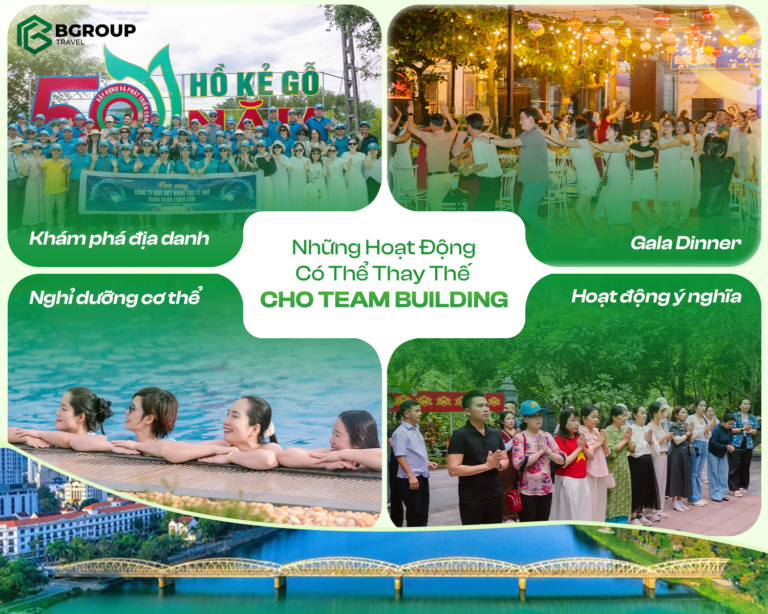
3 Types of Corporate Retreats Businesses Are Interested In
Corporate Retreats are increasingly becoming an important part of how businesses strengthen company culture, build team connections and support employee well-being.
Instead of organizing a trip centered only around sightseeing, dining and team-building games, businesses are beginning to focus more on the purpose behind the journey: Does the team need new inspiration, deeper connections or simply time to rest and recharge?
From these different needs, three Corporate Retreat formats have emerged: Discover Retreat, Connect Retreat and Reset Retreat. Each format brings a different objective, design approach and value to the team.
Why Are Corporate Retreats Becoming More Popular?
The growth of remote and hybrid working models, together with teams distributed across multiple locations, has made purposeful in-person gatherings increasingly important.
Theo Harvard Business Review, points out that remote and hybrid working can make it more difficult for employees to build meaningful relationships with their colleagues. Well-designed offsites can create opportunities for employees to connect and expand their collaborative networks across the organization.
In addition to connection, businesses are paying greater attention to employee experience, mental well-being and a sense of belonging.
As a result, Corporate Retreats are no longer viewed simply as employee benefits. They can become strategic activities that support company culture, employee engagement and organizational goals.
Retreat planning is also shifting away from standardized, large-scale company trips toward shorter and more purposeful programs designed around the characteristics of each team.
Cvent emphasizes that the success of a Corporate Retreat should be assessed by what changes after employees return, such as stronger connections, better decision-making and greater clarity about shared priorities.
3 Types of Corporate Retreats Businesses Are Interested In
1. Discover Retreat — Travel to Explore
A Discover Retreat focuses on destinations, nature, culture and authentic local experiences.
Rather than simply visiting popular tourist attractions, team members can enter new environments, learn about local culture, experience regional cuisine and participate in activities they may never have tried before.
Which Businesses Are Suitable for a Discover Retreat?
– Young, dynamic teams that enjoy new experiences.
– Businesses operating in creative, communications or technology industries.
– Teams that need fresh inspiration after a repetitive working period.
– Companies that want employees to step outside familiar environments.
– Teams looking to combine exploration, experience and natural connection.
What Activities Can Be Included in a Discover Retreat?
Depending on the destination and characteristics of the team, the program may include:
– Exploring natural landscapes.
– Trekking and outdoor activities.
– Visiting traditional craft villages and cultural spaces.
– Experiencing local cuisine.
– Meeting local communities.
– Participating in craft or creative workshops.
-Completing destination-based team challenges.
The value of a Discover Retreat does not lie only in the places the team visits. When employees enter a new environment together, they have more opportunities to observe, communicate and create shared memories outside the workplace.
This format is also suitable for businesses that want to restore curiosity, creativity and initiative within their teams.
2. Connect Retreat — Travel to Build Connections
A Connect Retreat is designed to bring team members closer through collaborative activities, shared spaces and experiences that require interaction.
Unlike conventional team-building programs that focus heavily on competition or forced participation, a Connect Retreat prioritizes natural interaction and psychological comfort.
Which Businesses Are Suitable for a Connect Retreat?
This model is particularly suitable for:
– Businesses with departments that rarely work together.
– Remote or hybrid teams.
– Organizations that have recently expanded their workforce.
– Businesses preparing to pursue new objectives.
– Teams that need to improve collaboration and mutual understanding.
– Companies seeking to strengthen their internal culture.
How Is a Connect Retreat Different from Traditional Team Building?
Team building can be part of a Connect Retreat, but it is not the entire journey.
If a program only focuses on games, employees may have fun for a few hours without necessarily forming stronger connections.
A Connect Retreat should include different layers of interaction, such as:
– Purposeful group activities.
– Conversations without the pressure of work.
– Informal time for team members to interact naturally.
– Reflection or sharing workshops.
– A bonding dinner, Gala Dinner or employee recognition activity.
– Opportunities for leaders and employees to communicate openly.
A successful program does not need to include too many games. Sometimes, one shared challenge, an intimate dinner or a meaningful conversation can create more value than a schedule packed with activities from morning to night.
What Should Remain After a Connect Retreat?
After the journey, employees should understand one another better, communicate more easily and share more common experiences beyond work.
This is the real outcome of a Connect Retreat: not only creating enjoyable moments during the trip but also helping the team collaborate more effectively after returning to work.
3. Reset Retreat — Travel to Recharge
A Reset Retreat focuses on relaxation, wellness, slow travel and temporarily disconnecting from the usual pace of work.
In this format, the company does not try to fill every part of the schedule with activities. Instead, the program intentionally creates space for employees to rest, reflect, communicate or spend time on their own.
Which Businesses Are Suitable for a Reset Retreat?
A Reset Retreat is suitable for:
– Teams that have recently completed a major project.
– Employees who have been working under intense pressure.
– Businesses that want to recognize and care for their teams.
– Leadership or management teams that need time to review their direction.
– Teams showing signs of fatigue or declining energy.
– Businesses seeking a slower and more restorative year-end trip.
How Can a Reset Retreat Be Designed?
The program may include:
– Staying in a peaceful, nature-based environment.
– Yoga, meditation or light physical activities.
– Spa and wellness treatments.
– Healthy dining experiences.
– Walking, cycling or exploring at a slower pace.
– Reducing meetings and digital device use.
– Providing free time instead of organizing continuous group activities.
– Hosting relaxed sharing sessions at the end of the day.
A Reset Retreat does not mean that employees do not interact with one another. Connection still happens, but at a slower, more comfortable pace without pressure to participate continuously.
The greatest value of this format is giving employees an opportunity to step away from deadlines, calls and meetings, allowing them to return to work with greater balance and renewed energy.
Which Corporate Retreat Should a Business Choose?
There is no single Corporate Retreat format that works for every business.
To choose the right one, a company should first consider three factors: its objectives, team characteristics and the organization’s current situation.
Choose a Discover Retreat When the Team Needs Fresh Inspiration
If the company wants employees to step outside familiar environments, experience something new and rediscover their inspiration, a Discover Retreat is a suitable choice.
In this format, the destination is more than a backdrop. It becomes an important part of the overall experience.
Choose a Connect Retreat When the Team Needs Stronger Relationships
If departments rarely interact, new employees have not fully integrated or the team has worked remotely for an extended period, a Connect Retreat should be prioritized.
Activities should encourage collaboration, dialogue and mutual understanding rather than focusing solely on competition.
Choose a Reset Retreat When the Team Needs Genuine Rest
If employees have just completed a demanding period, another packed schedule may make the trip feel like an additional assignment.
A Reset Retreat is more appropriate when the company wants to recognize its employees, support their well-being and help them restore their energy.
Can Different Retreat Types Be Combined?
Businesses can combine Discover, Connect and Reset elements within the same journey.
For example, a three-day program could be designed as follows:
– Day one focuses on destination discovery and local cultural experiences.
– Day two includes team connection activities, workshops or a Gala Dinner.
– Day three provides time for rest and energy renewal.
However, the program should still have one primary objective. Trying to include too many activities within a short trip can make the journey feel fragmented and exhausting.
Where Should Corporate Retreat Planning Begin?
An effective Corporate Retreat should not begin with choosing a hotel or listing tourist attractions.
A suitable planning process should start with the following steps:
Step 1: Define the Business Objective
Does the business want to strengthen employee relationships, inspire creativity, recognize the team or restore energy?
The clearer the objective, the easier it becomes to select the right retreat format.
Step 2: Understand the Participants
The business should consider employee ages, physical abilities, interests, company culture, group size and the existing level of interaction between departments.
A program suitable for a young team may not be appropriate for senior managers or a workforce consisting of multiple age groups.
Step 3: Select the Destination and Environment
The destination should support the program’s objective.
A Discover Retreat requires a location rich in cultural and natural experiences. A Connect Retreat needs an environment suitable for shared activities, while a Reset Retreat should prioritize privacy, tranquillity and access to nature.
Step 4: Design the Journey’s Pace
A successful retreat needs to balance shared experiences with personal time, as well as planned activities with natural interaction.
The quality of the journey should not be measured by the number of destinations or activities included in the itinerary.
Step 5: Define the Value After the Trip
The company can evaluate the program through employee surveys, feedback, interaction quality or changes in collaboration after the journey.
This step allows a Corporate Retreat to move beyond the scope of a company holiday and become a meaningful organizational activity.
BGROUP Travel Designs Corporate Retreats Around Business Needs
Every business has a different culture, workforce and set of objectives. Therefore, a Corporate Retreat should not be built from a standard itinerary and applied to every organization in the same way.
BGROUP Travel approaches each journey by first understanding the company’s actual needs: the team’s current situation, what needs to improve and what the business wants employees to take away from the experience.
The destination, accommodation, activities and pace are then connected to form one cohesive journey.
It could be a Discover Retreat that helps the team rediscover inspiration, a Connect Retreat that creates stronger relationships or a Reset Retreat that allows employees to pause and recharge.
A Corporate Retreat is no longer simply about: “Where will we go, where will we stay and what will we do?”
The more important question is “What will remain after the journey?”
Explore Corporate Trip projects delivered by BGROUP
Frequently Asked Questions About Corporate Retreats
What is a Corporate Retreat?
A Corporate Retreat is a journey designed for a business to achieve objectives such as employee engagement, culture development, inspiration or energy renewal.
How Is a Corporate Retreat Different from Team Building?
Team building is usually an activity or one part of a program. A Corporate Retreat has a broader scope that includes objectives, destinations, accommodation, experiences, connection activities and the value created after the journey.
How Long Does a Corporate Retreat Usually Last?
A Corporate Retreat commonly lasts from two days and one night to four days and three nights. The appropriate duration depends on the objective, destination, group size and company budget.
Should a Business Choose a Discover, Connect or Reset Retreat?
Discover is suitable when the team needs exploration and inspiration. Connect is suitable when stronger relationships are needed. Reset is appropriate when employees need genuine rest and renewed energy.
Can the Three Retreat Types Be Combined in One Trip?
Yes. A business can combine exploration, connection and relaxation, but it should define one primary objective to prevent the program from becoming unfocused.
Are Corporate Retreats Suitable for Small Businesses?
Yes. Corporate Retreats do not depend entirely on company size. A small team can organize a short journey focused on a specific objective and optimized according to its budget.
When Should a Business Organize a Corporate Retreat?
A business can organize a retreat after completing a major project, before entering a new development stage, when the team needs stronger connections or at the end of the year to recognize employees and restore their energy.
Does your team need to explore, connect or recharge?
BGROUP Travel works with businesses to define their objectives, select the right destination and design Corporate Retreats that match their company culture, team characteristics and budget.
Contact BGROUP Travel to begin creating a journey that is not only memorable during the trip but also continues to deliver value after the team returns.